
Sinner: The Notes
Notes from a Young Apprentice: Business, Learning, and Life on the Road in China

These notes come from a journey I made to China in 2006. Written hastily in my notebook at the time, they capture various aspects of Chinese life and business that I found particularly interesting. A number of entries also relate to my studies in Hermetics. I have made minor revisions to the grammar and phrasing to improve readability.
Page 1
…its own dormitory, the restaurant, and the only meeting rooms. In the vast majority of cases, the compound also includes saunas, swimming pools, and gyms where Tai Chi Chuan is usually practised. Generally, the average Chinese employee earns a salary in RMB (the yuan, the local currency) equivalent to about eighty dollars. Coming from rural areas with few employment opportunities, workers typically travel hundreds of kilometres from their homes to Guangdong.
Page 2
…of the Shambhala religion and American sympathisers. Inside the temple, meetings sometimes take place between local political and industrial representatives and delegations of American and British diplomats. After taking my leave, I had dinner at a restaurant in Jong Men with Wei Peime. Afterwards, I was driven through the rain to the hotel where I would spend the night in Chang Ping. Before going to bed, I connected my laptop to the hotel’s Ethernet network and…
Page 3
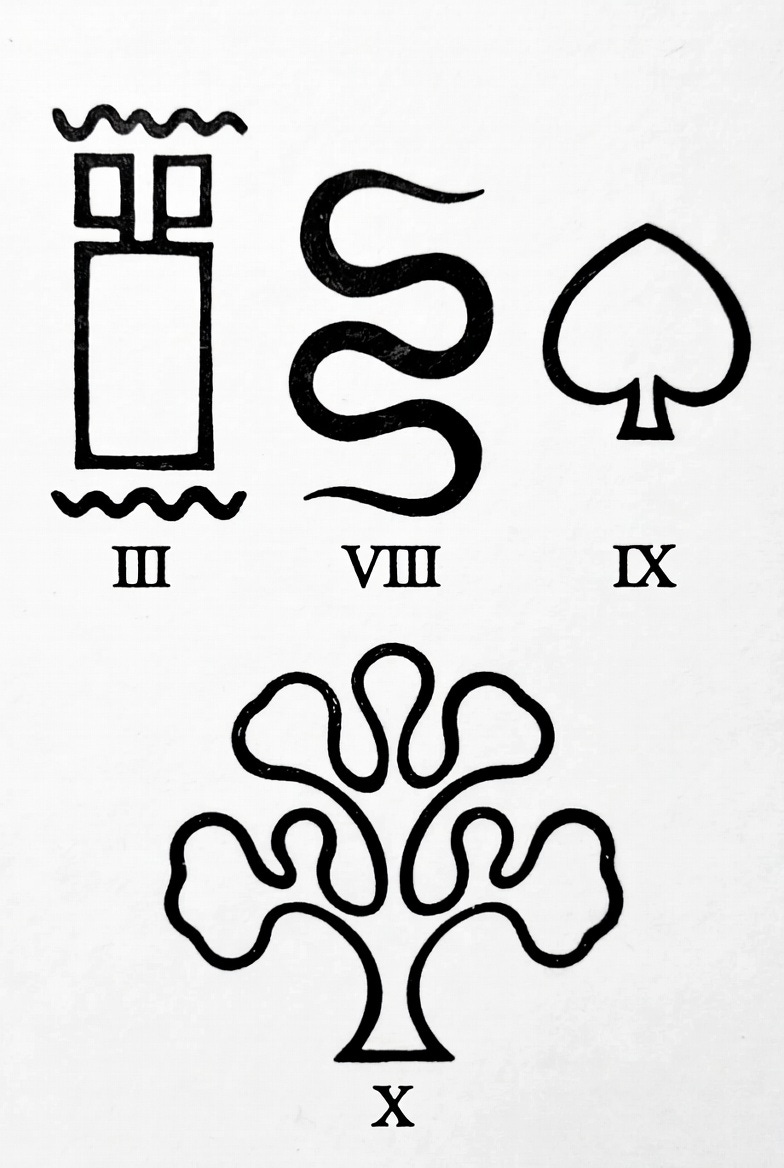
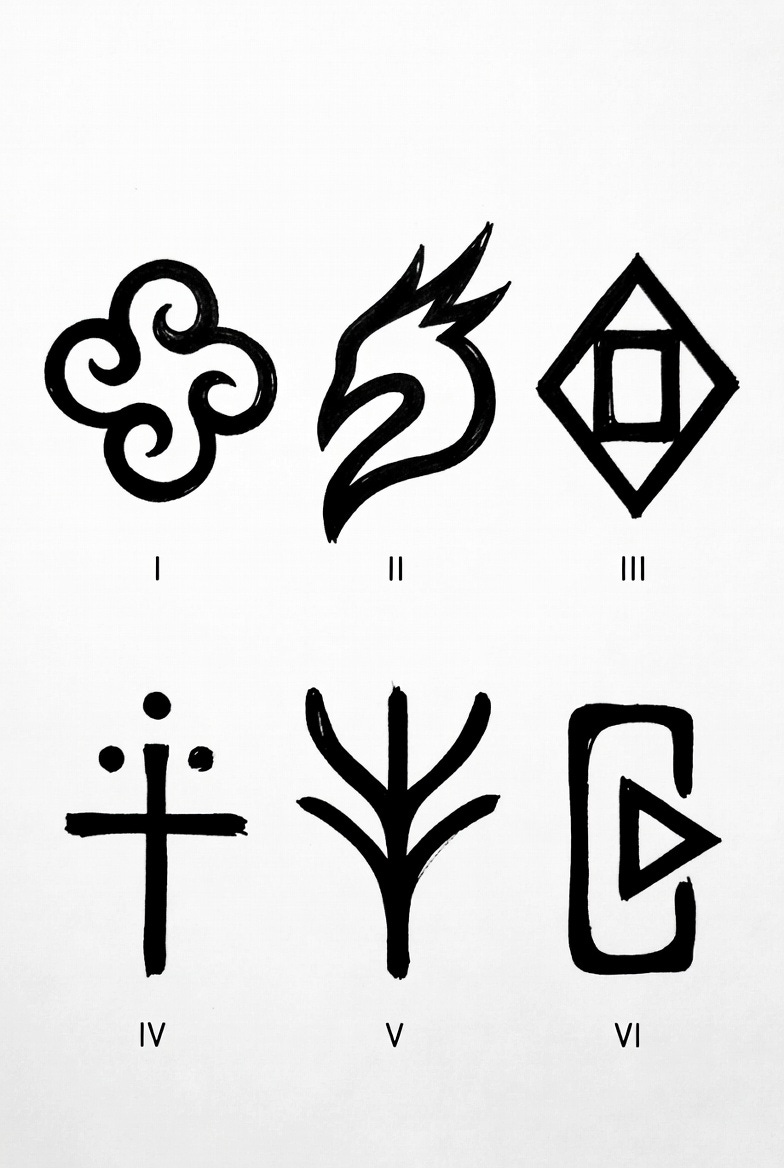
…of which were composed the keys or calls of the Aethyr commissioners brought to light by the notary John Dee, through the mediumistic operations conducted with the help of his collaborator and visionary sensitive, Sir Edward Kelley. The work The Kamontheeke describes the written language of the TEISHEE as a language constituted exclusively of seven graphic symbols which, when combined according to criteria comparable to our own grammar and joined by lines, can render any…
Page 4
…is introduced by a brief text composed of a few paragraphs. Even though written in alphabetic characters, these are expressions in a language completely foreign to any known human tongue. What truly astonishes the careful scholar and the well-prepared linguist is that this unknown language possessed its own structure, grammar, and orthography. Similar observations have been made by scholars of esotericism regarding the angelic or Enochian language…
Page 5
Describing the ten rings, the text introduces the subject with a brief passage transliterated from the TheKamontheeke language:
“IV, ZEB ZEBZEB SIR
IKIRIKIKITOIS
OOCHO SITU
BAUSCIUKIU
SAISARADAISCI
NA KUMEKUNERO
THISARB DO
DUHUICHI GOTT
ECOBUITH SIKK
IBOHIAKK DOSHI
ULTI KATOSO
FOCK TSHILAHU”
Page 6
At the far end of the hall stands a throne entirely carved from stone. On each side loom two stone lions, crouching like the sphinxes of Giza and endowed with an austere gaze. Along all the walls hangs a thick purple velvet cord, about two fingers wide. Above the throne is a reversed swastika (opposite in direction to the Nazi version), together with a silver sun and moon. Higher up, a large canvas panel, roughly three metres by two, is simply…
Page 7
In the evening I met Romeo Fiorino, an Italian industrial investor, and his consultant Ettore Naruto. Together we went to dinner with the city’s mayor and other local political and industrial representatives. The dinner was held in a private room of one of the finest restaurants in Chang Ping. The food was served on a small rotating lazy Susan placed in the centre of the dining table. In true Chinese style, the diners could turn the base and help themselves to the various dishes…
Page 8
…I read and wrote a few emails. A local television network was broadcasting American Pie in the original English with Chinese subtitles. Watching the film, I fell asleep with the light on and the television still running. The following morning I woke at dawn and, looking out of the window, realised that the weather had not improved — it was still raining. Reflecting on the previous day’s experience, I realised that what I had visited was not a genuine Buddhist temple in the strict sense, but rather a structure…
Page 9
Travelling along the recently built motorway (three very wide lanes in each direction), I watched advertisements for local manufacturing establishments scroll past the window. Just as in Europe one might see billboards promoting ladies’ underwear or the latest Mercedes model, here in this part of China the billboards advertised electricity-generating plants, local metal foundries, wafer-fabrication semiconductor factories…
Page 10
…para-religious organisation in the hands of the local authorities. Until that moment I had been convinced that Freemasonry had not taken hold in a pro-communist and conservative nation like China. But what I had seen proved me wrong: where America arrives, with its far-reaching political and economic activities, the reality of its powerful lodges follows as well. Eric was nonetheless a very interesting person, and we continue to stay in touch today, writing to each other and promising that at the first opportunity…
Page 11
…local metal foundries, and wafer-fabrication semiconductor factories. Every billboard displayed the complete address of the establishment, the name transliterated from Chinese in a way comprehensible to Westerners, along with the telephone and fax numbers and the company’s website URL. Notably, in the vicinity of these unusual advertisements, one could see numerous factories spread across the landscape. What truly strikes one about China’s industrial scenery is that every establishment has its…
Page 12
Unable to afford a rented apartment and unable to return home to his family every few weeks, the worker lives inside the factory compound. For this reason, beyond the apparent economic benefit of his multiplied salary, the Chinese employee gives a very clear picture of the internal reality of the factory — its dormitories, the size of the rooms, and the recreational spaces available to him.
Page 13
…Eastern dishes were not served in the Western style, divided into starter, main course, dessert, and cheese or fruit. The restaurant, located in a luxurious hotel, had been rented out entirely for us that evening; the whole dining area was empty and deserted. At the entrance there was a small tank containing live fish and crustaceans of every kind. Before taking our seats, we were invited to choose our own food. I had never seen prawns and lobsters so large and magnificent…
Page 14
This is because, lacking a sufficient and consistent income to buy an apartment, and knowing that with the miserable salary he receives he will never be able to buy or even rent a home, his entire life is spent within the four walls of the factory where he works. After about two and a half hours travelling northward, stopping only to pay the tolls, the capital of Guangdong province appeared in the distance…
Page 15
During the dinner, the conversation turned to the economic situation in southern China. A certain Mr. Wu explained to us that it is almost impossible to penetrate the Chinese market without high-level political connections — ideally former members of the Communist Party (before the changes in the regime). His business was in semiconductors: four wafer-fabrication facilities and one assembly plant. However, he had instead been exporting bottled drinking water to Singapore and Malaysia. As strange and eccentric as this business might seem, from what I understood…
Page 16
…concept expressible in written form. Hence, the brief passages in the TheKamontheeke language at the head of each chapter are presented both transliterated into our Western alphabetic script and in their original form. These and other characteristics — which can hardly be dismissed as mere products of the author’s imagination and narrative talent — make the work extremely attractive and interesting. They also leave the reader with a sense of imminent personal biological superiority and the promise of future results.
Page 17
…as if written in Oriental ideograms. I asked Wei to translate it for me and he explained that these were not Chinese but Japanese ideograms. The inscription read: “Much work, much money.” Wei explained that the Kong Que is a particular monastery. It is indeed a Buddhist monastery, but today it is closely tied to the will and patronage of a certain local entrepreneurial aristocracy. Its greatest, wealthiest, and most imposing patron is a Japanese man who emigrated to China.
Page 18
…is nonetheless clearly in contrast with Darwin’s evolutionary theories and with any recognised history of humanity. There is no supreme being that gradually evolved into a thinking entity through various stages; there is no progressive development of intellectual faculties or acquisition of knowledge, except as a consequence of the great remembered magician’s plan being set in motion. Every chapter of the TheKamontheeke series…
Page 19
…from Alaska and fantastic lobsters from Southeast Asia. When they were finally served, I realised how very different real Chinese cuisine is from what is served in Italian restaurants. It was truly exquisite. The lobster had been prepared and served with a horseradish cream, accompanied by tasty wheat-flour vermicelli. The crabs, generously boiled and prepared into popular morsels, were accompanied by a sauce similar to Japanese wasabi — a spicy horseradish sauce.
Page 20
…reportedly highly profitable. Singapore and Malaysia do not, after all, suffer from a shortage of drinking water, as they are ports surrounded by sea. Towards the end of the evening — perhaps thanks to the considerable amount of beer consumed — the conversation shifted to political topics. The Chinese, while not fanatical in the way some Westerners can be, are strongly proud of their nationality and of the “aesthetic communism” that has accompanied the country’s evolution over the years. Today, following the death of the RoC [note: PAC]…